Page 1 of 2

Examples of Different Aspect Ratios

Posted: Mon Nov 13, 2006 5:41 pm
by Escapay
I realized after posting it in "The Ultimate DVD Thread", that that thread is a niche thread that no everyone bothers reading. So, rather than let this all go to waste, and also to help inform the UD community, along with shameless showing off of [sarcasm]my masterful PhotoStudio Skills[/sarcasm], I've made several collages of various aspect ratios. Enjoy.

Different Aspect Ratios: (click each to see)

1.20:1 - As seen in Sunrise: A Song of Two Humans

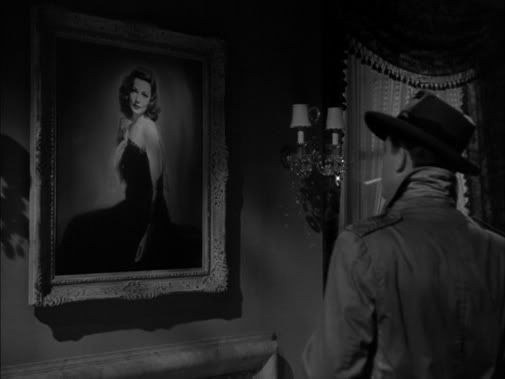
1.33:1/1.37:1 - As seen in Laura

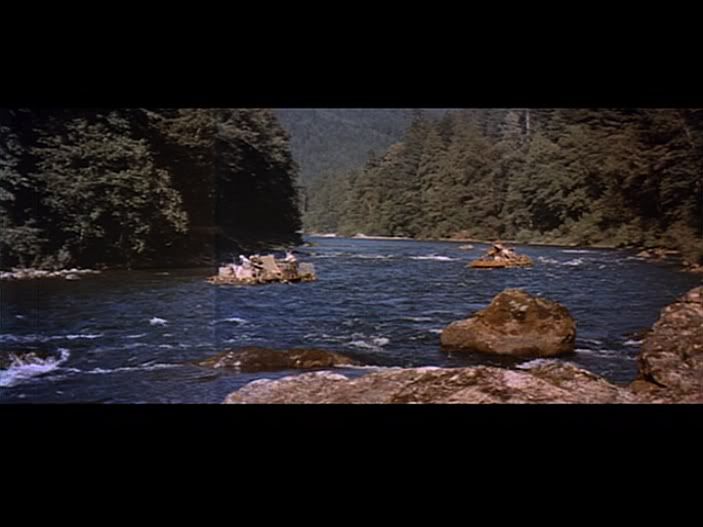
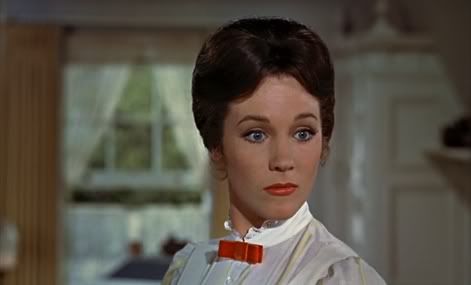
1.66:1 - As seen in Mary Poppins

1.75:1 - As seen in The Shaggy Dog

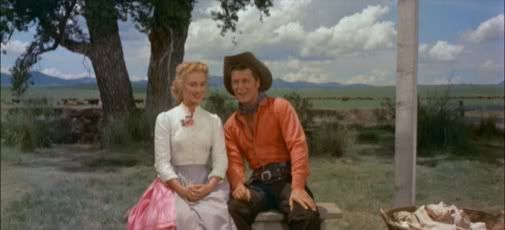
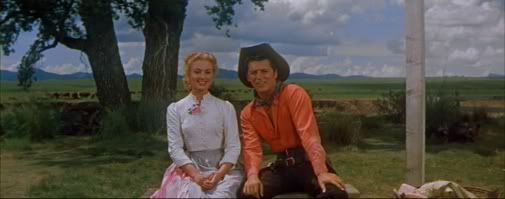
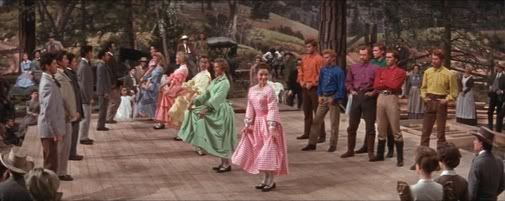
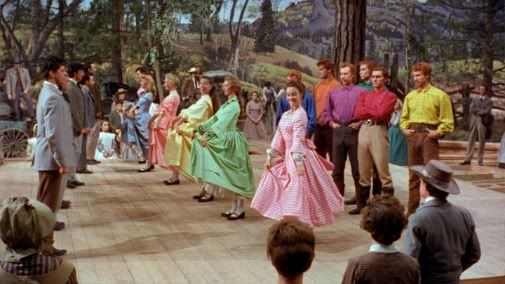
1.77:1 - As seen in Seven Brides for Seven Brothers
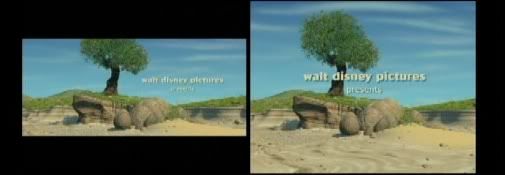
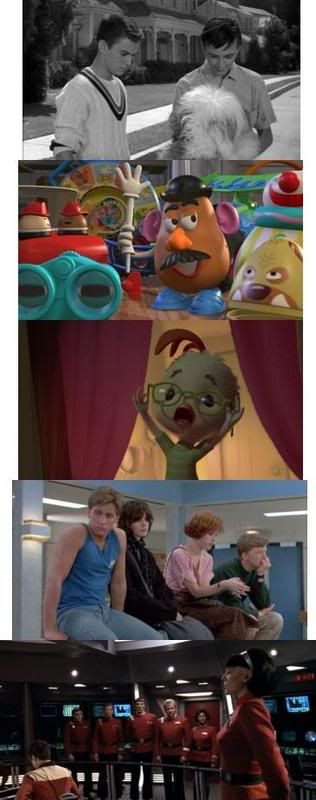
1.77:1 - As seen in Toy Story

1.78:1 - As seen in Chicken Little

1.85:1 - As seen in The Breakfast Club

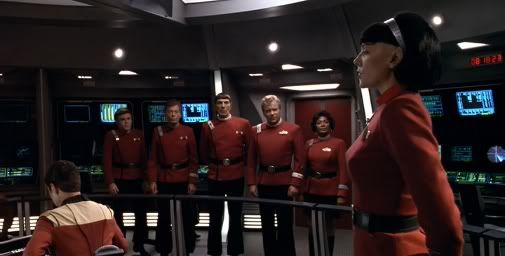
2.0:1 - As seen in Star Trek VI: The Undiscovered Country

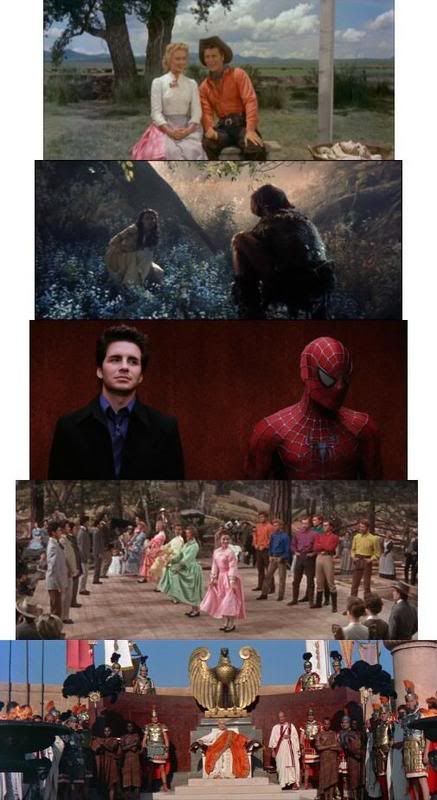
2.20:1 - As seen in Oklahoma (Todd-AO Version)

2.35:1 - As seen in Legend

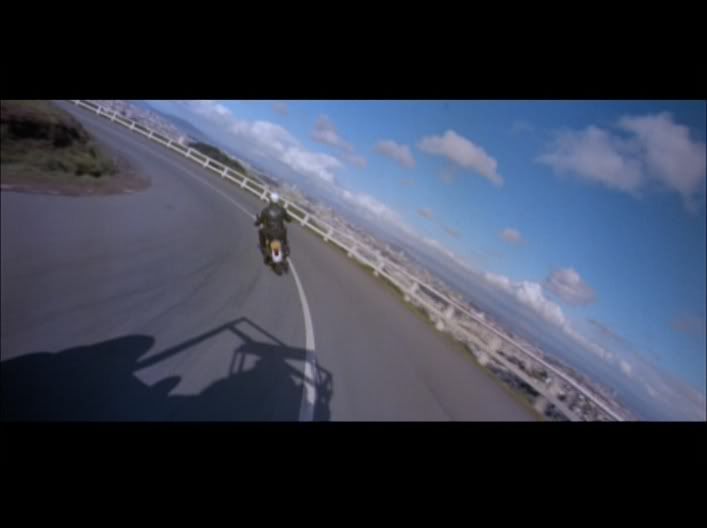
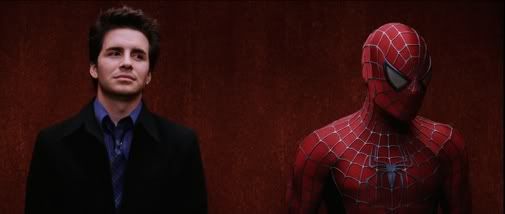
2.40:1 - As seen in Spider-Man 2

2.55:1 - As seen in Oklahoma
2.55:1 - As seen in Seven Brides for Seven Brothers

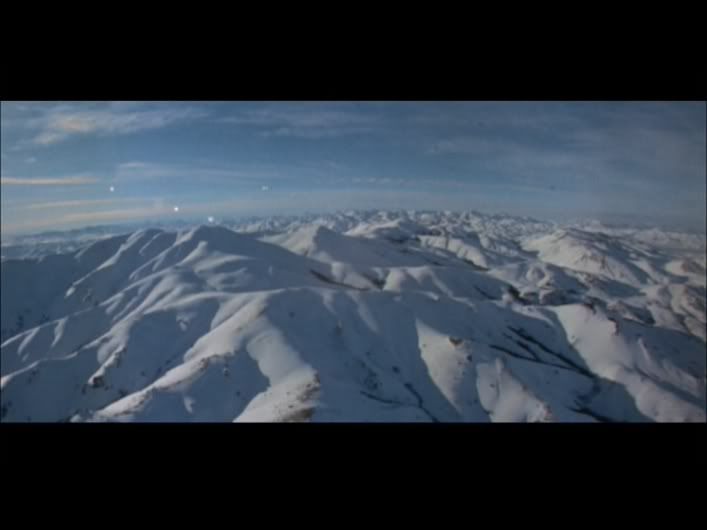
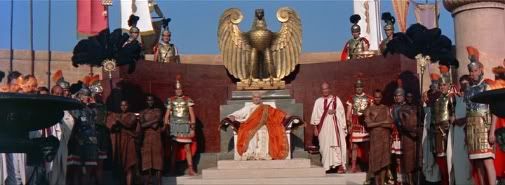
2.75:1 - As seen in Ben-Hur

A Composite of 1.20:1, 1.33:1, and 1.66:1

A Composite of 1.75:1, 1.77:1, 1.78:1, 1.85:1, and 2.0:1

A Composite of 2.20:1, 2.35:1, 2.40:1, 2.55:1, and 2.75:1

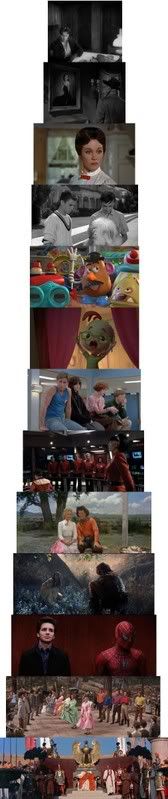
<center>A reduced composition of all 13
Image

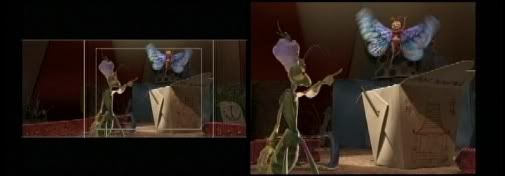
A Bug's Life (as seen on the DVD featurette)

ReStage:
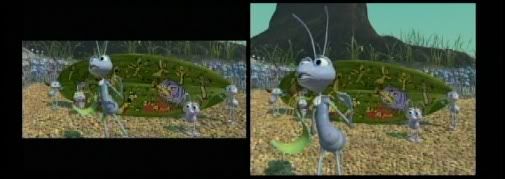
Image

Frame Height:
Image

Crop:
Image

Scan:
Image
</center>

Escapay

Posted: Mon Nov 13, 2006 5:45 pm
by PixarFan2006
It's amazing how they can fit all that in fullscreen mode. i never really knew there was a ratio of 2:75:1.

Posted: Mon Nov 13, 2006 6:00 pm
by Escapay
PixarFan2006 wrote:i never really knew there was a ratio of 2:75:1.
Not that many films used it because of its wide ratio. There were two cameras made for that ratio, MGM Camera 65 (used only twice), and the Ultra Panavision 70.

Films shot in MGM Camera 65:
1957 - Edward Dmytryk's Raintree County
1959 - William Wyler's Ben-Hur

Films shot in Ultra Panavision 70:
1962 - Lewis Milestone's Mutiny on the Bounty
1963 - Stanley Kramer's It's A Mad, Mad, Mad, Mad World (also presented in 70mm Cinerama)
1964 - Anthony Mann's The Fall of the Roman Empire
1965 - George Stevens' The Greatest Story Ever Told (also presented in 70mm Cinerama)
1965 - John Sturges' The Hallelujah Trail (also presented in 70mm Cinerama)
1965 - Ken Annakin's Battle of the Bulge (also presented in 70mm Cinerama)
1966 - Basil Dearden's Khartoum (also presented in 70mm Cinerama)

Escapay

Posted: Mon Nov 13, 2006 6:06 pm
by Josh
WOW! :o That just became a whole lot easier to understand, in fact I never understood it in the first place, I just saw some random digits followed by the words Aspect Ratio...but now I actually get it :D
I don't like movies that are too wide-screen or too full-screen (if that makes sense).
I like the Toy Story- The Breakfast Club range of screen sizes, but I'd like to know how they'd crop a Live-Action film to fullscreen, would someone possibly have only half their face on screen?

Posted: Mon Nov 13, 2006 6:25 pm
by Escapay
Josh wrote:WOW! :o That just became a whole lot easier to understand, in fact I never understood it in the first place, I just saw some random digits followed by the words Aspect Ratio...but now I actually get it :D
:D I edumacated somebody!
Josh wrote:I'd like to know how they'd crop a Live-Action film to fullscreen, would someone possibly have only half their face on screen?
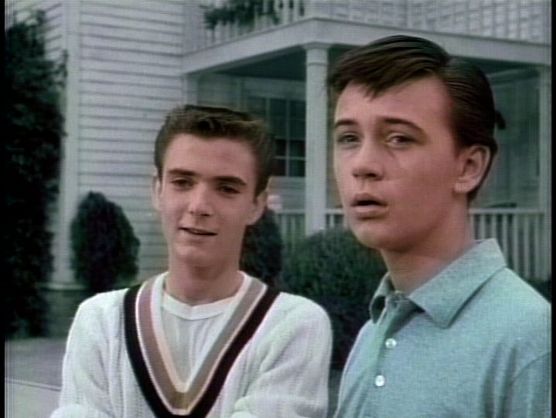
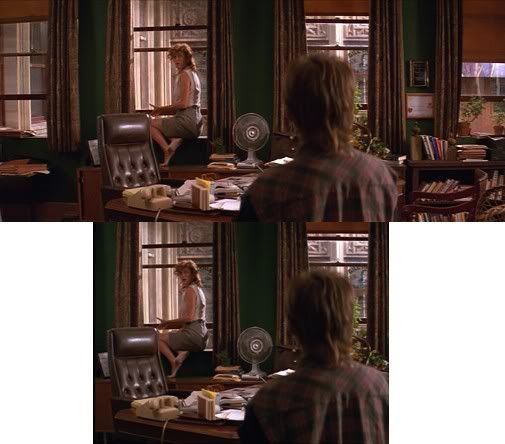
With many films in the 1.75:1 to 2.0:1 range, it's simply shot in 1.33:1 and matted down for a widescreen release, and is open-matte for a fullscreen release, though some picture is lost on the sides. Some films, though, are filmed straight in 1.85:1, and necessitates an actual pan & scan job on it.

With much wider films (anything beyond 2.20:1), it's almost always a pan & scan job, unless it's shot in Super35, in which it'll be framed for 2.35:1 and 1.33:1

The Shaggy Dog in widescreen:
Image

The Shaggy Dog in fullscreen: (unmatted, colorized)
Image

The Client in widescreen and fullscreen:
Image

Escapay

Posted: Mon Nov 13, 2006 6:55 pm
by Just Myself
Good job, Escapay. Although you made a mistake- The 2.55 shot is the same picture of the the 2.20 shot, the one from Oklahoma. I, too, never knew there was a 2.75 format. :o

Cheers,
JM :thumb:

Posted: Mon Nov 13, 2006 7:55 pm
by Escapay
Just Myself wrote:Although you made a mistake- The 2.55 shot is the same picture of the the 2.20 shot, the one from Oklahoma.
Whoops! Fixed it now.

Those two were filmed with dual ratios, and in the Ultimate thread, I explained why, but forgot to include it here, lol.

Anyway, Oklahoma was filmed in CinemaScope 2.55:1 ratio (35mm), and in Todd-AO 2.20:1 ratio (70mm). The Todd-AO version was used for exclusive roadshow engagements, while CinemaScope was used for the general release. While the Todd-AO normally should have better film quality (due to it being 30 frames a second instead of 24, along with the 70mm film used), the DVD has a remastered CinemaScope print, but an unrestored Todd-AO print, which is why it looks worse than it should.

Todd-AO:
Image

CinemaScope:
Image

With Seven Brides for Seven Brothers, not all theatres were equipped with widescreen capabilities yet (usually anamorphic lenses), so rather than not have the film in some theatres, it too was simultaneously filmed in another ratio, this time an easy-to-matte flat widescreen of 1.77:1. However, by the time the film premiered, enough theatres were widescreen-capable that it no longer was necessary to show the flat widescreen version. The DVD contains both, though only the CinemaScope version has 5.1 Dolby Digital (the flat widescreen has 2.0 Surround).

CinemaScope:
Image

Flat Widescreen:
Image

Escapay

Posted: Fri Nov 17, 2006 5:10 pm
by littlefuzzy
For the CinemaScope and Todd-AO versions of Oklahoma, they filmed the same scenes twice at different times of the day, and there are many people who prefer the Todd-AO version, due to lighting, slightly different versions of the acting, etc...

Posted: Fri Nov 17, 2006 10:01 pm
by Escapay
littlefuzzy wrote:For the CinemaScope and Todd-AO versions of Oklahoma, they filmed the same scenes twice at different times of the day, and there are many people who prefer the Todd-AO version, due to lighting, slightly different versions of the acting, etc...
And yet Fox screws us over by offering such a lousy print of the Todd-AO version of the movie on DVD.

Escapay

Posted: Fri Nov 17, 2006 11:28 pm
by dvdjunkie
Escapay wrote:
Films shot in Ultra Panavision 70:
1962 - Lewis Milestone's Mutiny on the Bounty
1963 - Stanley Kramer's It's A Mad, Mad, Mad, Mad World (also presented in 70mm Cinerama)
1964 - Anthony Mann's The Fall of the Roman Empire
1965 - George Stevens' The Greatest Story Ever Told (also presented in 70mm Cinerama)
1965 - John Sturges' The Hallelujah Trail (also presented in 70mm Cinerama)
1965 - Ken Annakin's Battle of the Bulge (also presented in 70mm Cinerama)
1966 - Basil Dearden's Khartoum (also presented in 70mm Cinerama)
I think you missed a couple in your list Escapay:

How The West Was Won
The World of the Brothers Grimm
Ben-Hur

:roll:

Posted: Fri Nov 17, 2006 11:32 pm
by Pluto Region1
Wow, it is amazing eh?

Well I don't know if I will ever fully understand this topic, but Escapay, thanks for all the time and hard work in putting together this exhibition of screen examples. Now I think the possibility of possibly understanding it is within reach, if that makes any sense! :D

What really irks me is why there isn't a standardization instead of all these different aspect ratios - this drives me crazy! I mean they had this same problem when the railroads in the early days but they quickly standardized to one gauge - why can't they do this in the film industry?

Posted: Fri Nov 17, 2006 11:59 pm
by Luke
Awesome thread, Escapay! Oh, and nice use of <i>The Client</i> - it's a personal favorite.

Posted: Sat Nov 18, 2006 12:19 am
by Escapay
dvdjunkie wrote:Escapay wrote:
Films shot in Ultra Panavision 70:
1962 - Lewis Milestone's Mutiny on the Bounty
1963 - Stanley Kramer's It's A Mad, Mad, Mad, Mad World (also presented in 70mm Cinerama)
1964 - Anthony Mann's The Fall of the Roman Empire
1965 - George Stevens' The Greatest Story Ever Told (also presented in 70mm Cinerama)
1965 - John Sturges' The Hallelujah Trail (also presented in 70mm Cinerama)
1965 - Ken Annakin's Battle of the Bulge (also presented in 70mm Cinerama)
1966 - Basil Dearden's Khartoum (also presented in 70mm Cinerama)
I think you missed a couple in your list Escapay:

How The West Was Won
The World of the Brothers Grimm
Ben-Hur

:roll:
Ben-Hur was one of only two films shot in MGM Camera 65 (the other being Raintree County), which is why it's not in the UP70 list. :)

I left off the other two because they were shot with the three-camera Cinerama process, and not the single-lens Ultra Panavision 70 that the others were shot in. As stated in the featurette on How the West Was Won:

Ironically, even though audiences were thrilled by the three-camera Cinerama process, it was phased out the next year by a single-projection system [Ultra Panavision 70] introduced for It's A Mad, Mad, Mad, Mad World.

According to a DVD review I read here, a Cinerama film would have an aspect ratio of about 2.88:1. But the DVD for How the West Was Won is presented from a 35mm print, and is closer to a standard 2.35:1 ratio than 2.88:1.

In a related note, I've been hearing rumors/speculation that How the West Was Won will be revisited by Warner Brothers in 2007. Hopefully, it will be restored and in anamorphic video (current DVD is from a 35mm print, is non-anamorphic and muddled with dirt and grain). Wouldn't mind more in-depth bonus features too, as the trailer and 15-minute featurette really isn't enough for this epic film.

Screen caps from the DVD. Easy to see just how bad the video quality is, especially when colors don't match up thanks to the three-camera process (not blaming it, just citing that the different reels yielded different color degradation over the years):
Image
Image
Image
Image
Image
Image
Image
Image
Image
Image

Two stills from the DVD featurette showing how Cinerama works:
Image
Image

A complicated camera angle, with the three lenses planted on the tracks. The first still shows an off-set camera set up, while the second shows how it appears onscreen:
Image
Image

A few stills (not very good quality) from the featurette that shows How the West of Won looks in theatres (not good example as it's not from an audience's eye level):
Image
Image

Escapay

Posted: Sat Nov 18, 2006 12:35 am
by Escapay
Pluto Region1 wrote:Well I don't know if I will ever fully understand this topic, but Escapay, thanks for all the time and hard work in putting together this exhibition of screen examples. Now I think the possibility of possibly understanding it is within reach, if that makes any sense! :D
No problem. It's one of those subjects that I like to read about and share, and hopefully I can provide more examples later, especially from films that utilize widescreen in unique ways (such as Brian De Palma's Carrie, or Stanley Kubrick, who'd use multiple aspect ratios in a single film).
PlutoRegion1 wrote:What really irks me is why there isn't a standardization instead of all these different aspect ratios - this drives me crazy! I mean they had this same problem when the railroads in the early days but they quickly standardized to one gauge - why can't they do this in the film industry?
Technically there *was* a standard, the Academy ratio of 1.33:1 before widescreen was big. However, now I think it's more a creative decision in what aspect ratio to shoot a film in, and I'd rather there be various ratios for various films. Spielberg, for example, loves using the 1.85:1 ratio on most of his films, despite some films that likely could be better suited in a wider "epic" ratio (like Empire of the Sun). And Ridley Scott, known for his big epic adventures, almost always uses a very wide ratio like 2.35:1.
The Lukester wrote:Awesome thread, Escapay! Oh, and nice use of The Client - it's a personal favorite.
Thanks! The Client is a favorite of mine as well. And perhaps conveniently, was the first DVD my eyes fell on when I glanced at my shelf to find a film with both versions on disc to do a 2.35:1 vs. 1.33:1 comparison of a film. If it wasn't The Client, we almost would have seen The NeverEnding Story in a 2.35:1 vs. 1.33:1 screen cap comparison!

Escapay

Posted: Sat Nov 18, 2006 10:08 pm
by Pluto Region1
Escapay wrote: Technically there *was* a standard, the Academy ratio of 1.33:1 before widescreen was big. However, now I think it's more a creative decision in what aspect ratio to shoot a film in, and I'd rather there be various ratios for various films. Spielberg, for example, loves using the 1.85:1 ratio on most of his films, despite some films that likely could be better suited in a wider "epic" ratio (like Empire of the Sun). And Ridley Scott, known for his big epic adventures, almost always uses a very wide ratio like 2.35:1.
Yeah, I got to thinking about it after I posted my little rant and I think it must be very similar to the photographer's options to shoot in a favorite film. When I was doing alot of 3-D I really liked to use Fuji Provia because of the brilliant color; and when I shot in black and white I favored another film - so I would think this is much like choosing a certain film type, but in this case they choose the film size. But now that I've seen these screen shots of "How the West was Won" I can see why they would want to use the super wide aspect ratio - those screen caps are just breath-taking! Thanks for posting those!

so I gather what you are showing here is that the screen is curved and in order to show films in Cinerama they used 2 or 3 cameras broadcasting the same film at the same time but from different angles? If this is the case, one could see why this wasn't in use for long - as wouldn't this be a bit labor intensive?

Posted: Sat Nov 18, 2006 11:10 pm
by Escapay
Pluto Region1 wrote:But now that I've seen these screen shots of "How the West was Won" I can see why they would want to use the super wide aspect ratio - those screen caps are just breath-taking! Thanks for posting those!
You're welcome! I'm glad someone's appreciating them!
Pluto Region1 wrote:so I gather what you are showing here is that the screen is curved and in order to show films in Cinerama they used 2 or 3 cameras broadcasting the same film at the same time but from different angles? If this is the case, one could see why this wasn't in use for long - as wouldn't this be a bit labor intensive?
If you ask Anders M Olsson (an infrequent UD'er), he can tell you a *lot* (and I mean a lot!) about Cinerama, as he's somewhat more an aficionado about it than I am. But yeah, the fact that it used 3 cameras/projectors was a hindrance to the system and led to both Todd-AO (by Mike Todd, who was one of the people behind Cinerama) and Ultra Panavision 70, which used a single shooting and projection system/lens.

In the 50th Anniversary DVD for Oklahoma!, they've got some great caps and examples of Todd-AO in their featurette "CinemaScope vs. Todd-AO", as well as from the original short that aired before the Todd-AO version, "The Miracle of Todd-AO". There's also another short, "The March of Todd-AO", but I figured it'd be enough to just cover the first two.

Anyways on to the caps with some notes from the DVD and me... (warning to anyone with dial-up, this post has 19 large screencaps just ahead!)

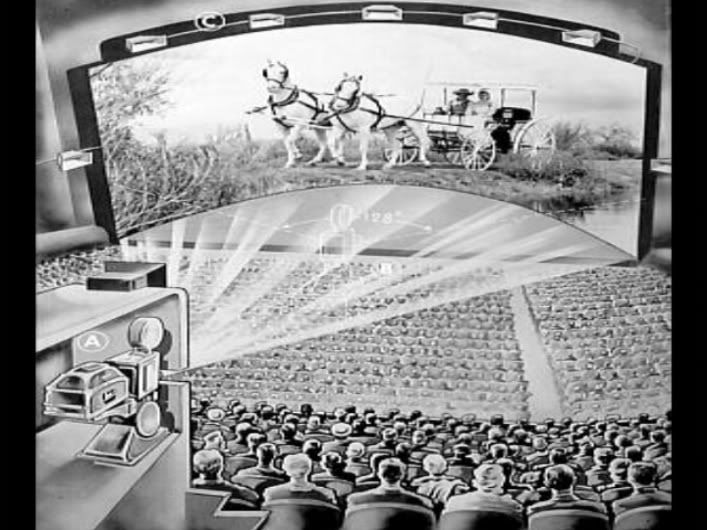
In these caps, we see a preliminary sketch of how Oklahoma! would look when presented in the Todd-AO format, followed by two comparisons of projection systems for Oklahoma in Cinerama and in Todd-AO (which was used). Both utilized a deeply curved screen, which gave a 128-degree field of vision, in an attempt to recreate a human's field of vision, which is about 160-degrees.

Image
Image
Image
The next two caps are of filmstrips. The first compares the 70mm Todd-AO filmstrip (shot at 30 frames per second) to a 35mm CinemaScope filmstrip (shot at 24 frames per second). Due to greater amount of frames per second in Todd-AO, it resulted in a smoother and more flowing picture, without the "flicks" that were attributed to 35mm film.

In the CinemaScope filmstrip, the image is squeezed to fit a 35mm film, then with the use of an anamorphic lens, stretches it horizontally to fit the width of the screen. With the Todd-AO filmstrip, the image is shot "normally" onto 65mm film, then is transferred to 70mm (to add the 6-channel soundtrack), and is slightly curved, and that curve gets straightened when projected onto the 128-degree screen. Interesting to note, that at most, a CinemaScope projection could give a depth of only 50-degrees in a curved screen, and had only 3-channel soundtracks.

Image
Image
These two caps offer the same shot, though composed differently, first in CinemaScope, then again in Todd-AO (on the featurette, it's presented in its original curved form, while the DVD has it at a normal flat form). Also, a few more caps of the original curved picture of Todd-AO.

Image
Image
Image
Image
Image

Finally, several caps from "The Miracle of Todd-AO", starting with a model of how a theatre equipped for Todd-AO looks. As opposed to CinemaScope, where one simply needed an anamorphic lens attachment for the regular projections, Todd-AO needed its own projector (because its spherical lens was not available simply as an attachment), a new 6-speaker system, and of course, the curved screen. One reason CinemaScope won over Todd-AO simply was the cost. Cheaper to make, cheaper to use, despite Todd-AO offering superior video and audio quality and a superior experience for the movie-going public. Anyway, after the model shot are a few caps of examples of Todd-AO and let me just say now, these caps don't do the video justice. They're much more impressive in motion, on a large widescreen television, with the home theatre system in full blast.
Image
Image
Image
Image
Image
Image
Image
Image
Image
Escapay

Posted: Sun Nov 19, 2006 7:59 am
by Dottie
Wow, Escapay, finally I'm able understand more about aspect ratios.
Thanks a lot!!!

Posted: Sun Nov 19, 2006 10:37 am
by dvdjunkie
Escapay will get this:


AWESOME!!!!!!!!!!!!!


Thanks for the education, Escapay. That took a lot of work, and from me, it is well appreciated. Great job.

ABSOLUTELY AWESOME!!!!!!!

:roll:

Posted: Sun Nov 19, 2006 11:26 am
by Lars Vermundsberget
As we see here, movies come in different shapes (width-to-height ratios), just like photographs and paintings. To those who need it, this is a very important message to get across. Hopefully, even more people will accept and appreciate this, and stop worrying about black bars on the TV screen. Good work!

Posted: Sun Nov 19, 2006 12:49 pm
by Escapay
Dottie wrote:Wow, Escapay, finally I'm able understand more about aspect ratios.
Thanks a lot!!!
You're very welcome!
dvdjunkie wrote:Escapay will get this:

AWESOME!!!!!!!!!!!!!
:lol: Thanks!
dvdjunkie wrote:Thanks for the education, Escapay. That took a lot of work, and from me, it is well appreciated. Great job.

ABSOLUTELY AWESOME!!!!!!!
You're awesomely welcome!
Lars Vermundsberget wrote:As we see here, movies come in different shapes (width-to-height ratios), just like photographs and paintings. To those who need it, this is a very important message to get across. Hopefully, even more people will accept and appreciate this, and stop worrying about black bars on the TV screen. Good work!
Thanks!

Escapawesomey